Trezor Safe 5 Review: Open-Source Security Finally Gets a Good Screen
A secure element, auditable firmware and a colour touchscreen make this the most verifiable hardware wallet you can buy — if you can live without Bluetooth.
Our rating of Trezor Safe 5 · 4.5 out of 5
For years the hardware wallet trade-off was uncomfortable: open firmware you could audit but a device that could be physically extracted, or a sealed secure element you had to take on faith. The Safe 5 is the clearest attempt yet to refuse that trade-off.
Setup and daily use
Initialisation took eleven minutes including writing down the backup. The colour touchscreen is the headline upgrade and it earns the attention: verifying a long address on a display you can actually read materially reduces the chance of approving the wrong destination, which remains the most common way self-custody users lose funds.
Haptic feedback on confirmation sounds like a gimmick and turns out to be useful — you know a signature happened without staring at the device.
Security
Firmware and the companion application are open source, so the security claims are checkable rather than asserted. The secure element addresses the physical-extraction weakness that dogged earlier generations, and passphrase support plus optional Shamir backup give experienced users room to build a recovery scheme that survives a single compromised location.
Auditability is not a marketing feature. It is the difference between a security claim and a security promise.
Where it falls short
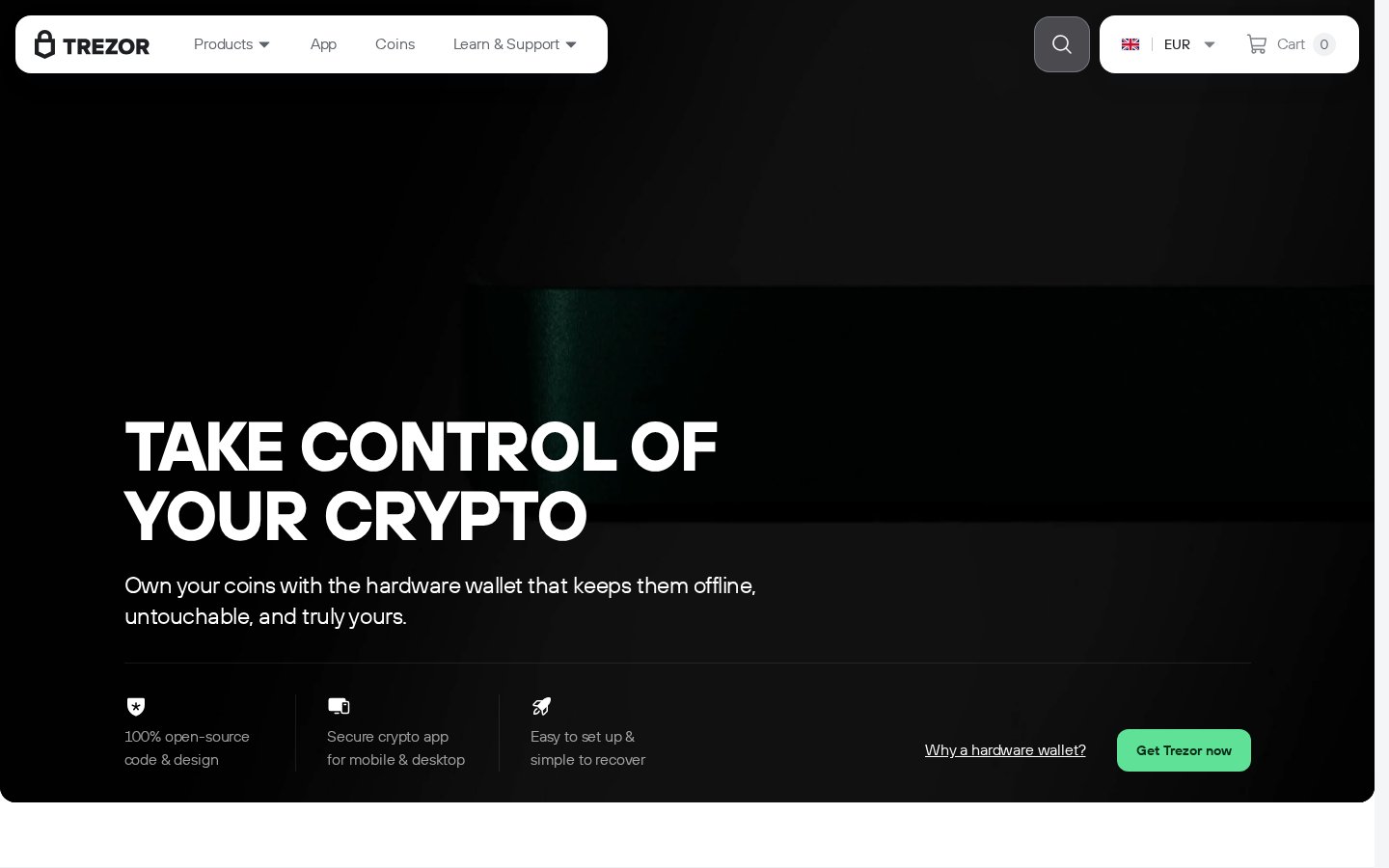
There is no Bluetooth, which means mobile signing involves a cable and a small amount of resentment. Asset coverage is narrower than Ledger's, and several long-tail chains require pairing with third-party software. At $169 it is also the most expensive device in its class.
Verdict: 4.5 out of 5
The best choice for anyone whose priority is verifiable security rather than convenience. Buyers who sign transactions primarily from a phone should compare against a Bluetooth device before committing.
Tested for four weeks. Device purchased at retail price by Bitcoin Bounty Hunter.
About the author
Caleb Ross is Senior Research Fellow at Bitcoin Bounty Hunter. Caleb Ross writes long-form analysis on protocol economics and network security. His research has been cited by university blockchain programs and industry standards bodies.
Last updated Aug 16, 2026, 09:30 AM UTC · Spotted an error? Request a correction