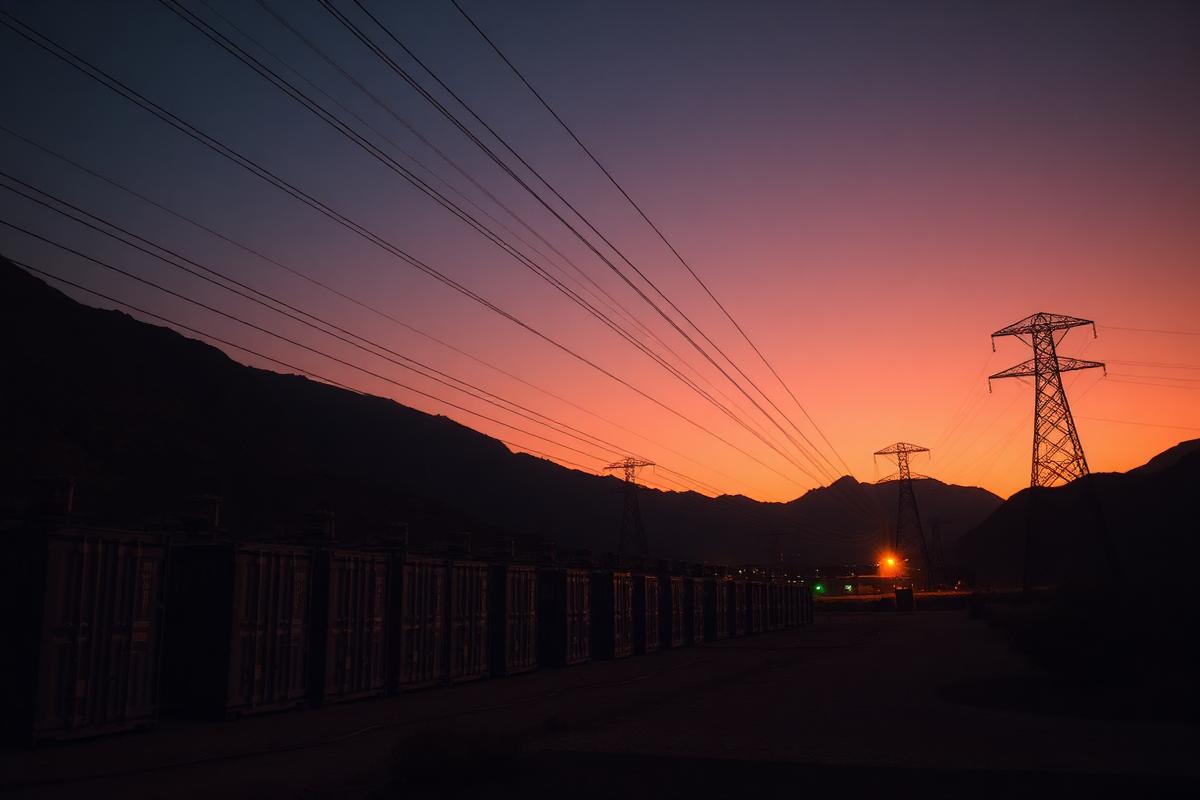
The Sovereign Miner: A Manifesto for the Post-Halving Era
As block rewards diminish, network security increasingly depends on energy-first operators who treat hashing as a byproduct of grid stabilisation.
The transition was subtle at first. What began as a search for cheaper electrons has become a rearchitecting of how large flexible loads interact with the grid. For the sovereign miner, the coin is no longer the primary product — the flexibility of the load is.
In the high deserts of West Texas and the industrial valleys of the Pacific Northwest, a different kind of operator is emerging: lean, vertically integrated power businesses that treat SHA-256 as a controllable sink rather than a speculative bet.
We are not just mining blocks anymore. We are selling the ability to disappear from the grid in ninety seconds.
The implications for network security are real. Tying mining viability to energy production rather than hardware efficiency alone makes the network more resilient to supply-chain shocks, but it also concentrates hashrate wherever regulators are most willing to compensate flexibility.
The counterargument
Critics note that demand-response revenue is itself a policy artefact and can be withdrawn. An operator whose margin depends on curtailment payments is exposed to a legislature, not a market.
About the author
Caleb Ross is Senior Research Fellow at Bitcoin Bounty Hunter. Caleb Ross writes long-form analysis on protocol economics and network security. His research has been cited by university blockchain programs and industry standards bodies.
Last updated Aug 16, 2026, 06:20 PM UTC · Spotted an error? Request a correction